Craft Supplies · 24 October 2026
Crochet Hook Size Guide: Sourcing the Right Range for Retail
Building a balanced needlecraft catalog requires a clear understanding of global sizing conventions and regional maker preferences. This comprehensive guide walks retail buyers through hook sizing, gauge matching, and material specifications for commercial success.
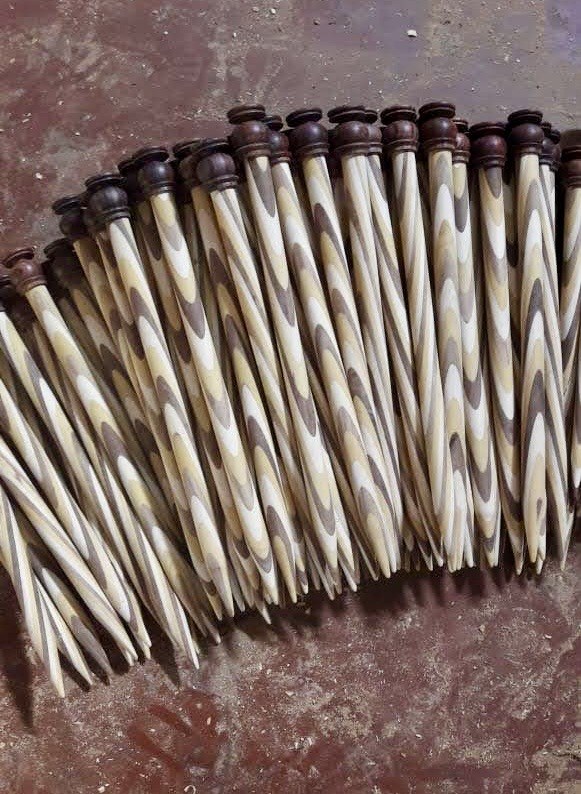
Sourcing craft tools requires a delicate balance between technical precision and tactile appeal. For specialty yarn boutiques, multi-store craft chains, and e-commerce brands, stocking crochet hooks is rarely as simple as purchasing a generic assortment. Needlecrafters are exceptionally discerning about their implements, and a single half-millimeter discrepancy can distort an entire garment's tension. Implementing an authoritative crochet hook size guide within your purchasing strategy ensures your product catalog satisfies both casual hobbyists and professional fiber artists.
Global trade in textile craft supplies has expanded rapidly, yet sourcing managers frequently encounter friction when coordinating sizing standards across multi-country supplier networks. Whether you are partnering with an offshore workshop or expanding your proprietary brand, understanding how hook dimensions correlate with yarn classifications, grip ergonomics, and material properties is foundational to commercial success.
Decoding Global Standards: Metric, US, and UK Classifications
One of the most persistent hurdles in craft merchandise sourcing is the coexistence of three divergent sizing protocols: the Metric system (measured in millimeters), the US Letter/Number system, and the legacy UK Imperial gauge system. Importers must curate collections that eliminate consumer confusion at the point of sale.
- The Metric Standard (mm): The only universally objective measurement. Ranging from micro steel lace hooks (0.5 mm) up to structural giant hooks (25 mm or larger), the metric system measures the precise diameter of the hook's shaft. Forward-looking brands consistently mark metric measurements on all tools, regardless of regional target markets, to provide an undisputed baseline.
- The US Letter System: Predominantly used in North America, this system designates sizes using alphabetical characters (e.g., B-1 for 2.25 mm, G-6 for 4.0 mm, N/P-15 for 10.0 mm). However, historical variations between legacy brands mean that some US letters do not translate uniformly across all manufacturers. When ordering production runs, always provide metric tolerances to your vendor rather than relying on letter designations alone.
- The UK Imperial Wire Gauge: An inverted numerical scale where higher numbers denote thinner hooks (e.g., UK 14 corresponds roughly to 2.0 mm, while UK 000 corresponds to 10.0 mm). While largely phased out in modern manufacturing, this standard remains deeply ingrained among vintage pattern enthusiasts across Britain and Commonwealth markets.
To prevent stock returns, international catalog listings should display dual or triple notations directly on the retail packaging—for instance: US G-6 | 4.00 mm | UK 8.
The Retailer's Crochet Hook Size Guide by Yarn Weight
Successful inventory planning requires aligning hook sizes directly with the standard yarn weight categories recognized by international craft councils. Below is a structured buying framework that outlines the recommended hook ranges, corresponding yarn classes, and consumer project profiles.
1. Steel & Micro Hooks (0.5 mm to 2.0 mm)
- Yarn Pairing: Thread lace, size 10 to 30 crochet cotton, micro-fiber filament.
- Target Projects: Delicate doilies, beaded micro-crochet jewelry, lace trims, and amigurumi miniatures.
- Commercial Notes: These hooks require exceptional tensile strength. While larger hooks thrive in organic materials, micro hooks under 2.0 mm are predominantly machined from high-grade stainless steel or nickel-plated brass to prevent bending under localized tension.
2. Fine to Light Hooks (2.25 mm to 3.75 mm | US B-1 to F-5)
- Yarn Pairing: Super Fine (Fingering/1-ply to 2-ply), Fine (Sport/Baby/3-ply to 4-ply).
- Target Projects: Socks, baby booties, lightweight shawls, colorwork mittens, and intricate mandalas.
- Commercial Notes: High inventory turnover category. These sizes experience heavy wear at the throat and head. Buyers should audit supplier samples closely for smooth throat carving to ensure delicate ply threads do not split.
3. Medium & Versatile Hooks (4.0 mm to 5.5 mm | US G-6 to I-9)
- Yarn Pairing: Light Worsted (DK/8-ply), Medium (Worsted/Aran/10-ply).
- Target Projects: Everyday sweaters, beanies, classic blankets, decorative cushions, and home textiles.
- Commercial Notes: This is the core revenue engine of any craft tool department, accounting for the highest sales volume. A customer purchasing their first tool kit will invariably start here. Sourcing premium finishes in this band yields superior margins.
4. Bulky & Chunky Hooks (6.0 mm to 9.0 mm | US J-10 to M-13)
- Yarn Pairing: Bulky (Chunky/12-ply), Super Bulky (14-ply to 16-ply).
- Target Projects: Heavy winter scarves, textured rugs, structured storage baskets, and oversized outerwear.
- Commercial Notes: At this diameter, tool weight becomes a major ergonomic factor. Dense plastics or heavy die-cast metals cause wrist fatigue during extended crafting sessions, making lightweight, warm-touch woods increasingly preferred by consumers.
5. Jumbo & Statement Hooks (10.0 mm to 25.0 mm and above | US N/P-15 to Z)
- Yarn Pairing: Jumbo roving, t-shirt yarn, recycled textile cord, macramé rope.
- Target Projects: Fast-finish arm knitting alternatives, pet beds, floor poufs, and statement wall tapestries.
- Commercial Notes: These oversized tools serve as both functional instruments and aesthetic lifestyle display items. Turned dense woods command high retail price points in this category.
Material Sourcing: Why Hardwoods Win in the Premium Tier
While utilitarian aluminum and molded acrylic hooks hold a baseline position in budget mass-retail, artisanal and lifestyle buyers are heavily migrating toward turned natural materials. Working with an experienced wooden products manufacturer India provides procurement teams with direct access to renewable hardwoods that deliver distinct tactile advantages.
Dense, fine-grained timbers such as Indian Rosewood (Sheesham), Mango wood, and Teak offer an optimal strength-to-weight ratio. Unlike cold metal, seasoned wood absorbs body warmth, providing relief to crafters suffering from arthritis or repetitive strain injuries. Furthermore, natural hardwoods offer a slight, organic friction: they hold slick silk and mercerized bamboo fibers on the shaft without premature slippage, yet polish naturally with use to let wool glide effortlessly.
When evaluating wholesale wooden accessories for your craft range, focus your inspection on three manufacturing attributes:
- Throat Geometry: Ensure the inline or tapered cut has been hand-sanded to a glass-smooth finish. Any raw wood grain or micro-splintering will catch twisted yarn fibers.
- Moisture Content: Hardwoods must be kiln-dried down to 8–12% moisture before turning. Inadequately cured timber warps in transit or splits when exposed to dry, heated retail environments.
- Coating Formulation: Non-toxic, moisture-resistant polyurethane or natural wax sealants must be applied evenly to prevent the wood from expanding when exposed to high ambient humidity.
Specifying Tolerances with a Private Label Manufacturer
Launching a proprietary line of craft implements requires close collaboration with your production partner. Working alongside an agile Private label handicraft manufacturer allows brand managers to customize everything from handle ergonomics to precise millimetric shaft calibers.
In Northern India's established woodcarving clusters, such as Nagina in the Bijnor district of Uttar Pradesh, specialized exporters like Woodzire have applied generational woodturning traditions to craft tool production since 1990. Artisans in this regional hub produce turned crochet hooks, knitting pins, and yarn winders carved from sustainably sourced mango, sheesham, and reclaimed teak, often accommodating boutique private-label runs starting from low minimum order quantities around 50 units.
When drafting your technical specification sheets (tech packs), establish clear acceptable variances:
- Shaft Diameter Tolerance: Specify allowable dimensional variance within ±0.05 mm for hooks under 6.0 mm, and ±0.1 mm for hooks 7.0 mm and above. Consistency across batches is essential for gauge predictability.
- Permanent Identification: Specify deep laser-engraved sizing markings on the thumb grip or handle base. Pad-printed ink stamps inevitably wear away from finger friction, leaving consumers unable to identify hook sizes after minimal usage.
- Ergonomic Profile Selection: Choose between traditional slim straight shafts, grooved thumb rests, or bulbous tear-drop ergonomic handles engineered for palm-grip crocheters.
Merchandising Strategies: Singles vs. Structured Gift Sets
Optimizing your catalog assortment requires balancing open-stock replacement hooks against packaged sets. Open stock meets immediate project-based demand, but curated box sets drive significantly higher average order values (AOV).
+-----------------------+-------------------------+-------------------------+
| Retail Metric         | Open Stock (Singles)    | Curated Boxed Sets      |
+-----------------------+-------------------------+-------------------------+
| Inventory Velocity    | Fast-turning, irregular | Predictable seasonal    |
| Margin Profile        | Moderate                | High (Gift/Luxury tier) |
| Packaging Sourcing    | Hang-card / Kraft sleeve| Fitted wooden or canvas |
| Primary Demographics  | Project replenishment   | Gift givers, collectors |
+-----------------------+-------------------------+-------------------------+
For premium retail presentations, pairing an ergonomic wooden hook set (sizes 3.5 mm to 6.5 mm) with matching accessories like hand-turned yarn bowls and wooden gauge calipers creates an attractive boutique retail bundle. Presenting the set in an engraved presentation box creates a gifting item with strong holiday and seasonal appeal.
Key Takeaways
- Anchor Your Inventory in Metric Precision: Always establish metric shaft diameters (mm) as the primary contract specification to eliminate discrepancies between regional US and UK charts.
- Protect Core Revenue with Mid-Range Assortments: Maintain the deepest inventory levels in the 4.0 mm to 5.5 mm bracket, which corresponds to the fast-moving DK and worsted yarn sectors.
- Prioritize Material Ergonomics: Hardwood hooks in sheesham, teak, and mango offer natural thermal warmth and tactile friction, making them a lucrative alternative to aluminum commoditization.
- Enforce Strict Production Tolerances: Require laser-etched metric markings and set acceptable shaft diameter tolerances to ±0.05 mm when contracting custom production runs.
- crochet hook size guide
- wooden products manufacturer India
- wholesale wooden accessories
- Private label handicraft manufacturer
- crochet hook supplier
- bulk craft supplies procurement
- wooden crochet hooks wholesale
- b2b needlecraft tools