
Nautical & Decor · 29 October 2026
Nautical Wooden Decor: 5 Sourcing Priorities for Buyers
Maritime-inspired wooden pieces work best when their construction is as convincing as their styling. These five sourcing priorities help buyers build coherent collections, specify dependable products and protect margins through delivery.
A wooden sailboat can anchor a coastal display—or become the damaged item that erases its margin. For importers and retailers, sourcing nautical wooden decor means balancing familiar maritime imagery with sound construction, restrained styling and packaging that survives distribution.
The strongest collections do not depend on putting an anchor on every surface. They connect material, proportion and function: a sculptural hull on a bookshelf, a carved wave panel above a console, or a useful tray with subtle coastal detailing. These pieces can suit seaside homes, hospitality interiors and inland customers seeking a relaxed atmosphere.
Here are five sourcing priorities for turning that aesthetic into a commercially workable range.
1. Give nautical wooden decor a clear design direction
“Coastal” is not a sufficiently precise buying brief. A weathered fishing-village collection, a polished yacht-inspired assortment and a playful beach-house range require different shapes, finishes and price positions. Mixing all three can make a display resemble a souvenir shop rather than a considered home collection.
Start with the room and customer, then choose the maritime references. Living-room accessories generally need visual restraint; holiday-home gift ranges can accommodate more literal boats, fish and anchors. Hospitality buyers may favour larger pieces with secure mounting and surfaces that housekeeping teams can clean easily.
Three useful collection directions are:
- Quiet coastal: natural wood, simplified hull forms, wave reliefs and limited painted accents.
- Traditional maritime: ship wheels, rope details and deeper wood tones, with careful control of metal finishes.
- Graphic seaside: painted fish, lighthouse silhouettes and contrasting stripes, developed around a tightly edited palette.
An initial assortment might combine a statement piece, a functional accessory and a small giftable object. That gives retailers different price levels without requiring an entirely separate visual language for each product.
When browsing a supplier’s wooden handicraft product range, distinguish existing production models from designs that require new tooling, carving development or assembly trials. A catalogue image alone does not establish repeatability.
For example, Nagina-based makers such as Woodzire sit within a broader Indian wooden-handicraft supply base. The relevant buying question is not simply whether a workshop offers nautical pieces, but whether it can reproduce your chosen proportions, finish and construction across a complete order.
2. Choose pieces that earn their place in the home
A successful range needs more than recognisable symbols. Each item should offer a convincing reason to occupy shelf, wall or tabletop space. Before approving a design, ask where the end customer will put it, how it will be used and what could make it inconvenient.
Consider these product families as distinct development briefs:
- Sculptural sailboats: useful as collection centrepieces, but mast height, base stability and detachable components need attention. Fabric sails add another material whose colour and assembly must be controlled.
- Carved fish and wave panels: suitable for wall groupings, provided hanging points keep the piece level and the back does not mark the wall.
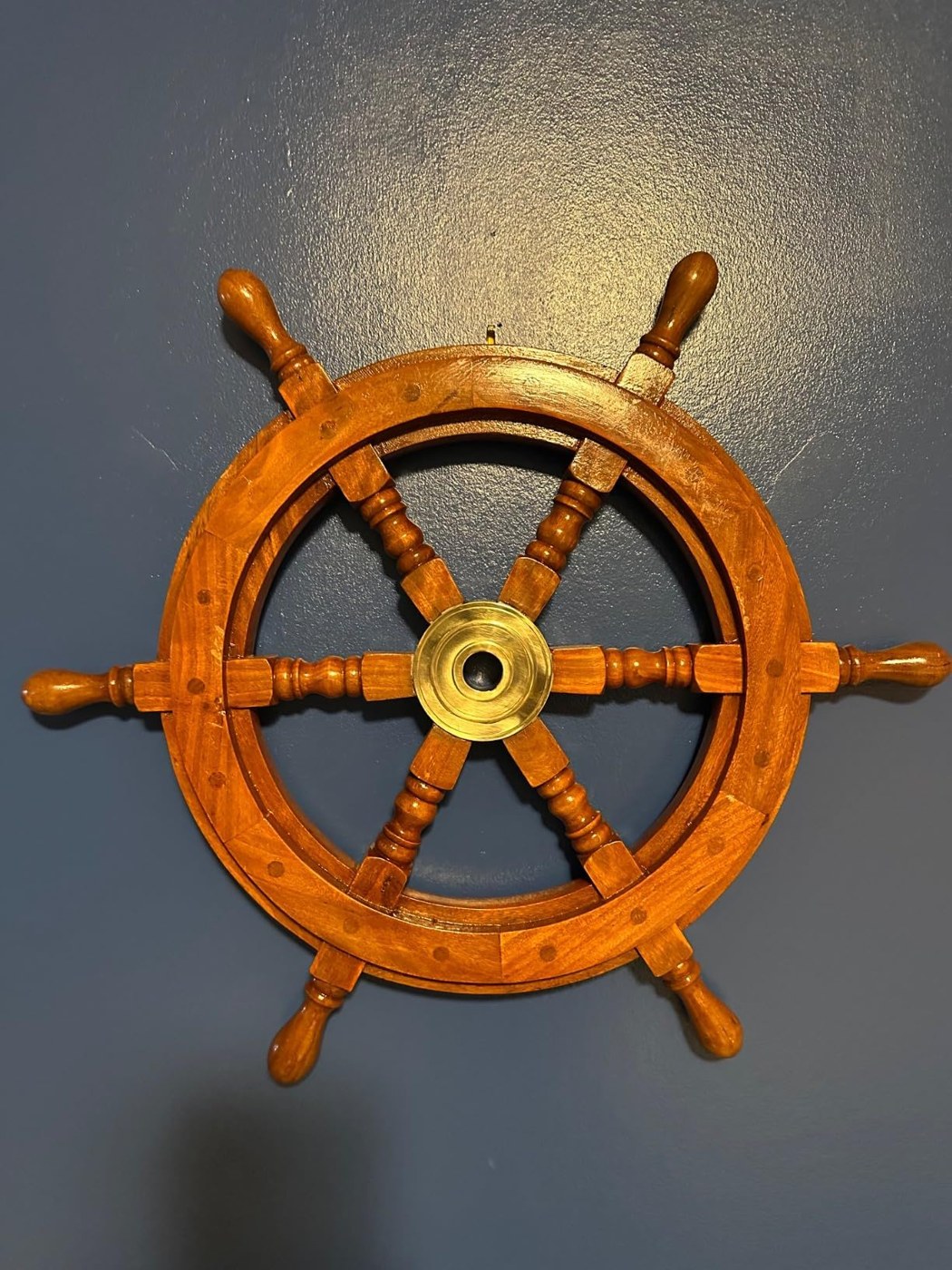
- Ship wheels and anchors: immediately legible maritime motifs, but projecting handles and narrow sections can increase damage risk.
- Trays, bookends and storage boxes: functional products with scope for restrained nautical detailing. Handles, contact surfaces and working parts matter more than decorative complexity.
- Lighthouse forms: effective as shelf accents, although tall, narrow designs need a stable footprint. An illuminated version introduces electrical requirements beyond those of a simple wooden ornament.
Be especially careful with implied functions. A decorative wooden wheel is not steering equipment. A candle display must be assessed for its intended use rather than assumed suitable because the recess fits a candle. Likewise, a tray intended for carrying packaged goods should not automatically be marketed for direct food contact.
Keep maritime claims equally disciplined. “Coastal-inspired” describes an aesthetic; “marine-grade” suggests performance that needs evidence. Indoor decorative finishes should not be sold as suitable for exposed terraces or damp bathrooms without appropriate testing.
For nautical wooden decor, long-term appeal often comes from making one familiar motif quieter and better proportioned—not adding more shells, rope and distressing to the same object.
3. Translate handmade character into measurable specifications
Wood variation can give handcrafted wooden products their appeal, but buyers still need clear boundaries. Specify what may vary naturally and what must remain consistent. Grain movement is different from a mast leaning visibly off-centre; tonal variation is different from an unfinished patch.
Material selection should follow the design. Mango, sheesham and teak can produce different visual effects, but a species name alone does not establish quality or suitability. Confirm the actual timber, sourcing documentation, construction method and finish system. Do not accept a broad “hardwood” description where species identification affects legality, appearance or customer claims.
For assembled pieces, inspect the weakest connections: mast to hull, wheel spoke to rim, rope to mounting point and hanging hardware to backing. Ask whether a decorative pin is carrying structural load and whether glue residue will remain visible after finishing.
A practical approval sheet should record:
- Overall dimensions, critical tolerances and the intended viewing orientation.
- Timber species, permitted joins and limits on visible repairs.
- An approved colour sample, sheen level and acceptable variation range.
- Stability requirements and mounting arrangements, including hardware supplied.
- Surface expectations, with no sharp edges, splinters or exposed fasteners.
- Any tests required for the intended use and destination market.
Conditioning deserves a separate discussion. Timber and finished goods need to be managed for expected storage and service conditions; a single moisture figure copied into every specification is not a substitute for a suitable process. Ask how the workshop measures moisture and handles stock before finishing and packing.
During supplier discovery, a regional directory of handicraft manufacturers in India can help buyers distinguish production clusters and investigate workshop capabilities. Nagina is a town in Bijnor district, Uttar Pradesh; use accurate locations in supplier records rather than treating those names as interchangeable.
Whether your search starts with “woodcraft exporter India” or a trade referral, verify who actually manufactures, finishes and packs the goods. A business listed as a “Wooden crochet hooks manufacturer” may have useful fine-shaping experience, but that does not demonstrate competence in large wall pieces or multi-part boat assembly. Evaluate the relevant production line.
4. Build private-label value through a controlled collection
Private label is most effective when it creates a recognisable assortment rather than simply placing a logo on an existing anchor. Shared proportions, coordinated finishes and consistent packaging can make products feel related without making them identical.
Set a limited number of collection rules: one dominant timber appearance, a small accent palette and recurring design details. A shallow wave carving, for example, could connect a box lid, bookend and wall panel without forcing every item into a novelty shape.
When discussing OEM and private-label wooden products, separate cosmetic changes from structural development. Changing a paint colour is a different task from altering the hull profile, adding a concealed hanging bracket or redesigning a removable mast. Each can affect sampling, labour, lead time and inspection.
Resolve these commercial details before purchase-order approval:
- Whether minimum quantities apply per design, size, colour or total order.
- Who owns commissioned artwork, drawings and any dedicated tooling.
- Which changes require a new approval sample.
- How reorders will be matched to the approved finish.
- Whether replacement parts can be supplied for repairable designs.
Approve branding placement with the product in its intended position. A prominent logo can undermine a restrained decorative object; an underside mark or discreet label may work better, provided required information remains accessible.
Keep product descriptions factual. Do not describe new timber as reclaimed, a decorative reproduction as an antique, or machine-assisted work as entirely hand-carved. Clear language protects both the retailer’s credibility and the craft behind the product.
5. Cost the delivered product, not just the workshop price
Nautical forms can be awkward to ship. Their commercial weakness is often empty space: a light sailboat with a tall mast may require a large carton, while wheel handles can be damaged unless protected individually.
Compare assembled and knock-down designs early. A removable mast may reduce packed volume, but it introduces customer assembly and a potential loose-fit complaint. Request an assembly trial by someone unfamiliar with the product, using only the proposed instructions and supplied parts.
A supplier’s export-packaging approach is a starting point for discussion, not proof that a particular item will survive your distribution route. Approve packaging around the actual product and test it against the handling conditions expected in wholesale, retail replenishment or individual parcel delivery.
Check that protective materials do not rub painted surfaces, transfer colour or place pressure on delicate carvings. Goods should be suitably dry before packing; moisture-control materials cannot compensate for wet timber or poorly managed storage. Where solid-wood transport packaging is used, confirm applicable treatment and marking requirements separately from product requirements.
Build the margin calculation around packed dimensions, freight, destination handling, inspection, assembly and plausible damage exposure—not factory price alone. A slightly simpler object that arrives intact may outperform a more elaborate piece with repeated claims.
For a first order, inspect production units against the approved sample and retain photographs of both product and packing. Reorders of nautical wooden decor should preserve the same specifications unless changes are explicitly agreed.
Key takeaways
- Establish one coastal design direction before selecting individual motifs.
- Give each piece a clear placement, function and construction brief.
- Define acceptable handmade variation without accepting structural defects.
- Use private label to coordinate the collection, not merely add branding.
- Approve packaging and calculate delivered margin before scaling the range.
- nautical wooden decor
- woodcraft exporter India
- handcrafted wooden products
- Wooden crochet hooks manufacturer
- maritime home accessories
- private-label wooden decor
- coastal decor sourcing
- wooden handicraft export packaging